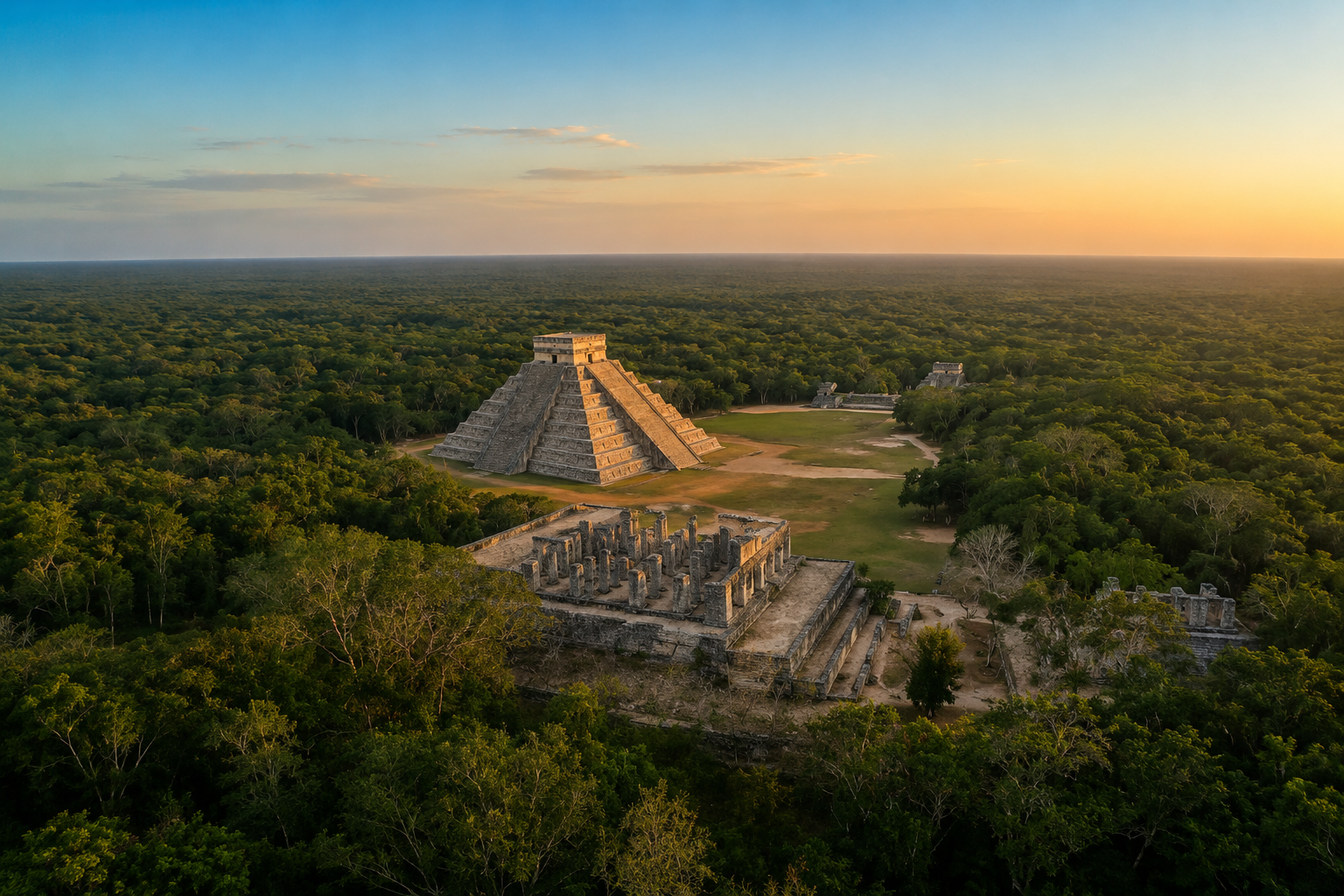
What can you see at Chichén Itzá? From the iconic Pyramid of Kukulkan to the Great Ball Court, ancient temples and the Sacred Cenote, the archaeological site offers far more than many visitors expect.
Tickets & Tours
While most visitors immediately recognize the famous pyramid, the ancient Maya city is much larger than many people expect. Ancient temples, ceremonial platforms, impressive plazas and one of the largest ball courts ever discovered all combine to create one of Mexico's most extraordinary historical sites.
As you explore the archaeological site, every structure tells part of the story of the Maya civilization. Some buildings were designed for religious ceremonies, while others were used for astronomy, politics or public gatherings. Together, they reveal why Chichén Itzá became one of the most powerful cities in the Yucatán Peninsula and why it continues to attract millions of visitors every year.
If you're still deciding whether the archaeological site belongs on your itinerary, why Chichén Itzá is worth visiting becomes even clearer once you discover everything this ancient Maya city has to offer. Knowing what you can see in advance also makes it much easier to plan your visit.
El Castillo: The Icon of Chichén Itzá
No visit to Chichén Itzá is complete without seeing El Castillo, the monument that has become the symbol of the entire archaeological site. Officially known as the Temple of Kukulkan, this spectacular pyramid dominates the central plaza and is usually the first structure visitors notice after entering the site.
However, El Castillo is much more than a beautiful pyramid. The monument reflects the Maya's remarkable understanding of mathematics, astronomy and architecture. During the spring and autumn equinoxes, sunlight creates the famous serpent-shadow effect along the northern staircase, making the pyramid one of the world's most celebrated examples of ancient engineering.
Although climbing the pyramid is no longer allowed, walking around it reveals impressive details from every angle. The more you learn about the Chichén Itzá Pyramid (El Castillo), the easier it is to appreciate why this extraordinary monument has become the unmistakable symbol of the ancient Maya city.
Tickets & Tours
The Great Ball Court
Just a short walk from El Castillo stands the Great Ball Court, one of the most impressive structures in the entire archaeological site. Measuring approximately 168 metres (551 feet) long, it is the largest known Maya ball court ever discovered and offers an incredible glimpse into the ceremonial life of the ancient city.
The ball game played here was far more than entertainment. Instead, historians believe it carried deep religious and political significance. Teams competed using only their hips, elbows and knees to move a heavy rubber ball through stone rings positioned high on the walls. Although the exact rules remain uncertain, the game almost certainly formed an important part of Maya ceremonial life.
Even today, visitors are often surprised by the court's remarkable acoustics. A simple clap near one end can echo clearly across the enormous space, demonstrating the remarkable engineering skills of the Maya builders.
The Temple of the Warriors
Another highlight that deserves plenty of time is the Temple of the Warriors. Located east of El Castillo, this impressive complex consists of a stepped pyramid, an elevated temple and a large ceremonial plaza surrounded by countless stone columns.
Archaeologists believe the temple played an important role in military ceremonies and religious rituals. At the top once stood a famous Chac Mool sculpture, where offerings were likely placed during important ceremonies. Meanwhile, the surrounding columns may have supported large roofed structures that welcomed priests, nobles and other important members of society.
Because this area receives fewer visitors than El Castillo, it often feels calmer. Even so, it is one of the site's most remarkable monuments. If you're planning your route, allow enough time to explore the complex properly. Otherwise, it is easy to walk past it too quickly.
Tickets & Tours
The Group of the Thousand Columns
Stretching beside the Temple of the Warriors is one of the most distinctive areas of Chichén Itzá: the Group of the Thousand Columns. Although the name exaggerates the actual number of columns, the rows of stone pillars still create one of the site's most memorable views.
Researchers believe these columns once supported large roofed halls used for ceremonies, trade or administrative purposes. While only the columns remain today, it's still possible to imagine how impressive these buildings must have looked during the city's peak.
Walking through this section also gives visitors a better sense of Chichén Itzá's enormous scale. The archaeological site covers far more ground than many first-time visitors expect, which is why how long a visit to Chichén Itzá takes is worth considering before you arrive.
El Caracol: The Ancient Observatory
Unlike most other buildings at Chichén Itzá, El Caracol immediately stands out because of its unusual circular tower. For that reason, it is often called the Observatory, although historians continue to study exactly how it was used.
Many researchers believe the Maya carefully aligned this structure with important astronomical events. As a result, priests could observe the movements of the sun, moon and planets. These observations played an important role in agriculture, religious ceremonies and the Maya calendar. As a result, El Caracol provides another impressive example of the scientific knowledge that helped Chichén Itzá flourish for centuries.
Although El Caracol receives fewer visitors than El Castillo, many travelers consider it one of the site's hidden highlights. Visiting this quieter monument early in the day usually makes for a much more relaxed experience, making the Chichén Itzá opening hours well worth checking before your trip.
Tickets & Tours
The Sacred Cenote
One of the most mysterious places at Chichén Itzá is the Sacred Cenote. The Sacred Cenote is a large natural sinkhole located north of El Castillo. Unlike the famous swimming cenotes found elsewhere in the Yucatán Peninsula, this cenote was primarily used for religious ceremonies rather than recreation.
Archaeological excavations uncovered jewelry, pottery, gold objects and human remains at the bottom of the cenote. These discoveries suggest that valuable offerings were made to the gods during important ceremonies, especially in times of drought. As a result, the Sacred Cenote provides fascinating insight into the spiritual beliefs of the ancient Maya.
If you also want to experience one of the region's beautiful swimming cenotes, the best cenotes near Chichén Itzá offer the perfect opportunity to cool off after exploring the archaeological site.
Las Monjas and the Church
Another fascinating part of Chichén Itzá is the Las Monjas complex. Although the Spanish gave it the name "The Nunnery," the buildings were never used by nuns. Instead, archaeologists believe this impressive complex served important administrative and ceremonial functions within the ancient city.
Next to Las Monjas stands a smaller structure known as La Iglesia, or The Church. Its beautifully decorated façade contains detailed stone carvings, including masks of the Maya rain god Chaac. Together, these buildings showcase a different architectural style from El Castillo and demonstrate the remarkable diversity found throughout Chichén Itzá.
Because many visitors focus only on the pyramid, this quieter section often receives much less attention. However, taking the time to explore it provides a broader understanding of how large and sophisticated the ancient city once was.
Tickets & Tours
Smaller Monuments Worth Discovering
While El Castillo attracts most of the attention, many smaller structures are equally fascinating. As you continue walking through the archaeological site, you'll come across ceremonial platforms, ancient temples and beautifully carved stone monuments that reveal different aspects of Maya life.
One example is the Platform of Venus, which many historians associate with astronomical observations and religious ceremonies. Nearby, the Temple of the Jaguars overlooks the Great Ball Court and features impressive carvings that are still visible today. Although these monuments are less famous than El Castillo, they add important pieces to the story of Chichén Itzá.
For that reason, it's worth slowing down instead of rushing from one highlight to the next. Every section of the archaeological site offers something unique, whether you're interested in history, architecture or photography.
Can You See Everything in One Visit?
Most visitors can comfortably see the main highlights in two to four hours. That usually provides enough time to walk around El Castillo, explore the Great Ball Court, visit the Temple of the Warriors and discover several of the smaller monuments.
However, if you enjoy archaeology or photography, you may want to allow additional time. Exploring at a slower pace lets you appreciate details that are easy to overlook during a quick visit. It also gives you more opportunities to enjoy quieter moments between the larger tour groups.
If you're planning your itinerary, how long a visit to Chichén Itzá takes depends on your interests, but knowing what most travelers experience makes it much easier to organize the rest of your day.
Tickets & Tours
Tips for Exploring the Archaeological Site
Because Chichén Itzá covers a large area, a little preparation goes a long way. Comfortable walking shoes, lightweight clothing, sunscreen and plenty of water will make your visit much more enjoyable, especially during the warmer months.
In addition, arriving shortly after opening gives you the best chance to experience the major monuments before the busiest crowds arrive. You'll also enjoy softer light for photographs and more comfortable temperatures while walking between the different structures.
If you're visiting independently, taking a little time to prepare before you leave can make your day much more enjoyable. Knowing where to park at Chichén Itzá and deciding what clothes to wear to Chichén Itzá will help you arrive feeling well prepared and avoid unnecessary surprises once you reach the archaeological site. Small details like these often make a bigger difference than visitors expect, especially during the hottest part of the day. Every traveler also experiences Chichén Itzá differently. Families with young children usually appreciate a more flexible pace, while older visitors often prefer a route with regular opportunities to rest. Spending a few minutes considering visiting Chichén Itzá with children or visiting Chichén Itzá with seniors can make the entire visit feel more comfortable, relaxed and enjoyable from start to finish.
Final Thoughts
What can you see at Chichén Itzá? The answer is far more than a single pyramid. From the iconic Chichén Itzá Pyramid (El Castillo) and the vast Great Ball Court to the Sacred Cenote, ancient temples and remarkable observatory, every part of the archaeological site reveals another chapter of Maya history. Together, these monuments create one of the most rewarding archaeological experiences anywhere in the Americas.
If you're still planning your visit, our Chichén Itzá Visitor Guide brings together practical advice on tickets, transportation, opening hours and planning your day. You can also browse our Frequently Asked Questions for quick answers before exploring one of the New Seven Wonders of the World.