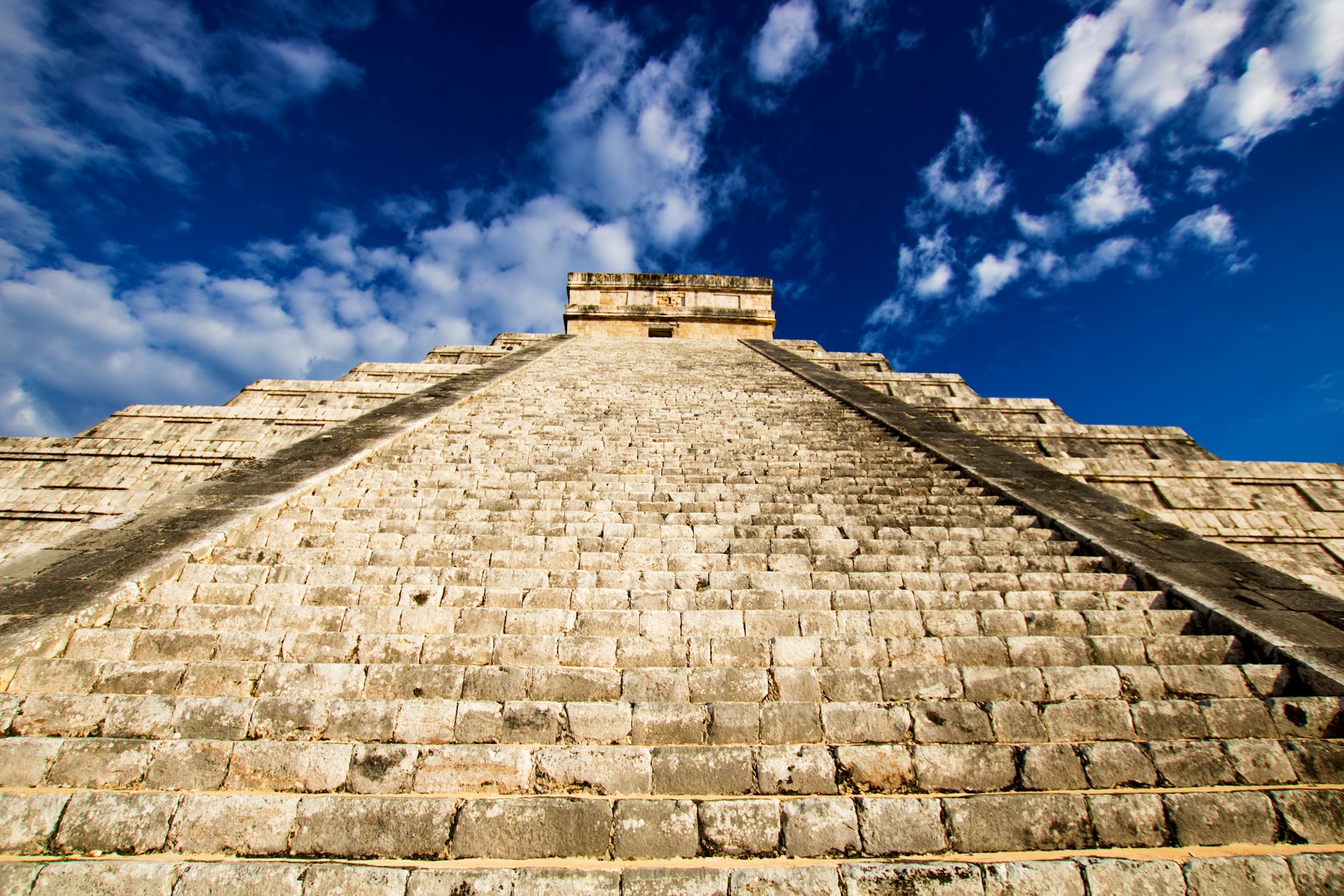
The Chichén Itzá Pyramid is the most recognizable landmark in the ancient Maya city and one of the most famous monuments in Mexico.
Tickets & Tours
Officially known as El Castillo and also called the Temple of Kukulkan, this remarkable structure attracts millions of visitors every year. Although the names are different, they all refer to the same pyramid that dominates the heart of Chichén Itzá.
However, its popularity extends far beyond its impressive appearance. The Chichén Itzá Pyramid combines remarkable architecture, advanced astronomical knowledge and deep religious symbolism in a single monument. As a result, it has become the defining image of Chichén Itzá and one of the main reasons why the archaeological site is considered one of the world's greatest historical treasures.
El Castillo is often the reason people first hear about Chichén Itzá, but most visitors leave impressed by much more than the pyramid alone. Why Chichén Itzá is worth visiting becomes clear as you explore the rest of this extraordinary archaeological site.
What Is the Chichén Itzá Pyramid?
The Chichén Itzá Pyramid is officially called El Castillo, although many visitors know it as the Temple of Kukulkan or the Kukulkan Pyramid. Standing approximately 30 metres (98 feet) high, including the temple at its summit, it dominates the central plaza and immediately draws the attention of almost everyone entering the archaeological site.
Because several names are used, visitors sometimes assume they refer to different buildings. However, El Castillo, the Temple of Kukulkan and the Chichén Itzá Pyramid are all the same extraordinary monument. Each name simply highlights a different aspect of its history, architecture or cultural significance.
Today, the pyramid is protected as part of the UNESCO World Heritage Site and remains the highlight of nearly every visit. Seeing El Castillo at its best often comes down to timing, and the best time of day to visit Chichén Itzá offers cooler temperatures, fewer crowds and some of the most beautiful light around the ancient monument.
Why Is It Also Called the Temple of Kukulkan?
The name Temple of Kukulkan refers to the feathered serpent deity worshipped by the Maya. Kukulkan played an important role in Maya religion and was associated with knowledge, agriculture, renewal and the heavens. For that reason, historians believe the pyramid was designed to honour this powerful deity.
This connection becomes especially clear during the spring and autumn equinoxes. On those days, sunlight and shadow create the famous illusion of a serpent slowly descending the northern staircase. Thousands of visitors travel to Chichén Itzá every year to witness this remarkable event, which perfectly demonstrates the Maya's sophisticated understanding of astronomy.
Understanding the meaning behind the different names helps visitors appreciate the monument on a deeper level. Rather than seeing only an impressive pyramid, they begin to recognise it as a masterpiece that combines science, religion and engineering.
Tickets & Tours
Why Is the Chichén Itzá Pyramid So Famous?
Many ancient pyramids still stand around the world, yet few are as instantly recognizable as the Chichén Itzá Pyramid. Part of its appeal lies in its remarkable symmetry. From every direction, the monument appears perfectly balanced, making it one of the most photographed landmarks in Mexico.
Its fame is also linked to its extraordinary design. Archaeologists have discovered that many of the pyramid's proportions correspond with the Maya calendar, demonstrating an impressive understanding of mathematics and astronomy. Even today, researchers continue to study the structure and uncover new insights into the knowledge of the ancient Maya.
The pyramid's central location also adds to its popularity. It is usually the first major monument visitors encounter after entering Chichén Itzá, making it the natural focal point of almost every visit. The time you spend around El Castillo often depends on your overall itinerary, so knowing how long a visit to Chichén Itzá takes makes it easier to explore the archaeological site at a comfortable pace.
A Masterpiece of Maya Engineering
The Chichén Itzá Pyramid remains one of the finest examples of Maya engineering ever built. Each side features a broad staircase leading to the temple at the summit, while the stepped terraces create the clean geometric shape that has become famous around the world.
However, the pyramid was designed to achieve far more than visual beauty. Its orientation carefully reflects important astronomical events, showing that Maya architects combined religious beliefs with advanced scientific knowledge. Even after centuries, the precision of the construction continues to impress archaeologists and engineers alike.
Although visitors are no longer allowed to climb the pyramid, walking around its base reveals new details from every angle. As the sunlight changes throughout the day, different parts of the stonework become more visible. The changing light transforms the appearance of El Castillo throughout the day, which is why many visitors enjoy reading a few tips on taking photos at Chichén Itzá before they arrive.
Why Timing Matters When Visiting the Chichén Itzá Pyramid
Because the Chichén Itzá Pyramid is the site's main attraction, it naturally draws the largest crowds. By late morning, hundreds of visitors often gather around El Castillo to admire its architecture and capture photographs from every angle.
Fortunately, a little planning can make a noticeable difference. Visitors who arrive shortly after opening usually enjoy a much quieter atmosphere and cooler temperatures. That gives you more freedom to appreciate the monument and photograph it without large crowds in the background.
Before planning your visit, checking the Chichén Itzá opening hours will help you arrive early, avoid the busiest crowds and experience the pyramid at its very best.
Tickets & Tours
Can You Climb the Chichén Itzá Pyramid?
For many years, visitors could climb the steps of the Chichén Itzá Pyramid and enjoy panoramic views across the ancient city. Today, however, that is no longer allowed. Access to El Castillo has been prohibited since 2008 to protect the monument and help preserve one of Mexico's most important archaeological treasures.
Although some visitors are disappointed when they first hear this, the restriction has played an important role in protecting the pyramid from further wear. Millions of people visit Chichén Itzá every year, and allowing everyone to climb the ancient staircase would have caused significant damage over time. Today, visitors can still walk all the way around the monument and admire its remarkable design from every angle.
If you're planning your first visit, it's also worth taking a few minutes to avoid some of the most common mistakes when visiting Chichén Itzá. Understanding the site rules before you arrive helps you enjoy a smoother and more relaxed experience.
The Famous Serpent Shadow Phenomenon
One of the most fascinating features of the Chichén Itzá Pyramid appears during the spring and autumn equinoxes. As the afternoon sun moves across the pyramid, triangular shadows form along the northern staircase. Together with the carved serpent head at the base, these shadows create the illusion of a giant snake slowly descending the pyramid.
This extraordinary event is one of the best-known examples of Maya astronomical knowledge. Rather than being a coincidence, the pyramid was carefully designed so that sunlight would interact with its architecture at specific times of the year. Even today, archaeologists continue to study the precision behind this remarkable phenomenon.
Because the equinox attracts thousands of visitors, the archaeological site becomes especially busy during these periods. Visitors looking for a quieter experience often choose a different season or plan their trip around the best time of day to visit Chichén Itzá, when the crowds are usually much smaller.
Fascinating Facts About the Chichén Itzá Pyramid
The more you learn about El Castillo, the more impressive it becomes. Every side of the pyramid contains 91 steps, and together with the platform at the top, the total reaches 365. Many historians believe this represents the number of days in the solar year, although some details remain the subject of academic discussion.
Researchers have also discovered that the visible pyramid was built over an earlier structure. Hidden inside is another pyramid, complete with its own temple. During excavations, archaeologists even uncovered a striking red jaguar throne decorated with jade, highlighting the ceremonial importance of the monument.
These discoveries remind visitors that the Chichén Itzá Pyramid is much more than an iconic landmark. It is also one of the most important archaeological sites in the Americas, continuing to reveal new insights into the achievements of the ancient Maya.
Tickets & Tours
How to Get the Best View of El Castillo
Almost every visitor wants to capture the perfect photograph of the Chichén Itzá Pyramid. Fortunately, the wide open plaza surrounding El Castillo offers excellent viewpoints throughout the day. However, your timing can make a noticeable difference.
Shortly after opening, the light is softer and the crowds are usually much smaller. This makes it easier to photograph the pyramid without large groups of people in the foreground. As the day progresses, the central plaza becomes increasingly busy, especially when multiple tour groups arrive at the same time.
If photography is one of your priorities, you'll find more practical advice in our guide on taking great photos at Chichén Itzá. It covers the best viewpoints, lighting conditions and simple tips for capturing the monument at its best.
Is Seeing the Chichén Itzá Pyramid Worth the Trip?
For many travelers, El Castillo is the main reason for visiting Chichén Itzá. Even if you've seen countless photographs online, standing in front of the pyramid is a completely different experience. Its size, symmetry and historical significance are difficult to appreciate until you see it with your own eyes.
The pyramid is also only one part of a much larger archaeological site. Nearby, you'll find the Great Ball Court, the Temple of the Warriors and many other fascinating structures that reveal the scale of this ancient Maya city. Together, they create an experience that continues to impress visitors from around the world.
Whether you're travelling independently or joining an organized tour, allowing enough time to explore the area around El Castillo will make your visit even more rewarding. Comfortable shoes, plenty of water and an early arrival all help you enjoy the experience at a relaxed pace.
Final Thoughts: Chichén Itzá Pyramid
The Chichén Itzá Pyramid, officially known as El Castillo and also called the Temple of Kukulkan, is far more than an ancient monument. It represents centuries of Maya knowledge, combining architecture, astronomy and religion in one extraordinary structure. Even after hundreds of years, it remains one of the world's most recognizable pyramids and the unmistakable symbol of Chichén Itzá.
If you're still planning your visit, our Chichén Itzá Visitor Guide brings together practical information on opening hours, tickets, clothing, transportation and much more. You can also browse our Frequently Asked Questions for quick answers before you explore one of the New Seven Wonders of the World.